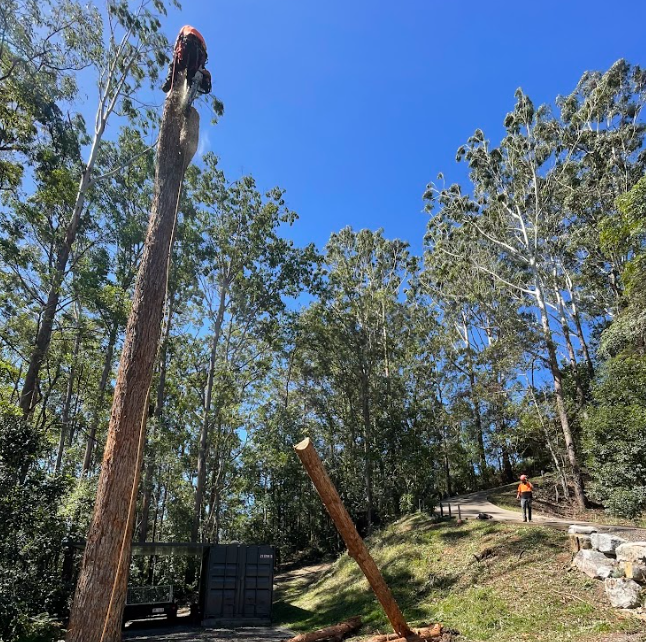
Removing an Overhanging Gum Tree
Case Study: Safe Tree Lopping in Glenview – Superior Tree Service
Introduction
In the rural locality of Glenview on the Sunshine Coast, Queensland, many properties are surrounded by tall, mature gum trees. These trees provide shade, natural beauty, and habitat for wildlife, but they can also create challenges for property owners when branches extend over boundaries. Superior Tree Service was recently engaged to manage a large gum tree that had grown to a substantial height and spread. While the tree was healthy, its overhanging branches extended into the neighbour’s backyard, creating safety concerns. This case study details how Superior Tree Service carried out a professional lopping job to restore safety while maintaining the tree’s long-term health.
Background
The homeowner in Glenview valued the gum tree for its shade and the way it enhanced the rural character of the property. However, the tree’s natural growth pattern had caused its canopy to extend across the fence line. Several large branches stretched into the neighbour’s yard, overshadowing a garden and children’s play area.
The neighbour raised concerns about falling branches, particularly during storm season, when strong winds could cause breakage. While the tree showed no signs of disease or decay, its sheer size and branch structure meant that preventative maintenance was necessary to reduce risks.
The homeowner contacted Superior Tree Service after hearing of their reputation for safe, precise tree management in confined or sensitive areas.
Site Assessment and Planning
A qualified arborist from Superior Tree Service attended the property to carry out a detailed assessment. The inspection confirmed that the tree was healthy and structurally sound, but that the canopy had become unbalanced due to the overhanging limbs.
The arborist explained to the client that full removal was unnecessary. Instead, selective lopping of the overhanging branches would resolve the safety issues while allowing the tree to continue thriving. The key goals of the project were:
- Reducing risk: Cutting back the branches that extended into the neighbour’s yard.
- Preserving tree health: Ensuring that lopping cuts were made correctly to prevent stress or disease.
- Maintaining aesthetics: Shaping the canopy to retain a natural appearance.
- Ensuring safety: Using professional rigging techniques to prevent any damage to fences, gardens, or property during the process.
Once the plan was agreed, the team scheduled the work on a fine, calm day to ensure safety and precision.
The Tree Lopping Process
On the day of the project, the Superior Tree Service team arrived with the necessary equipment, including climbing gear, ropes, rigging pulleys, and Stihl chainsaws designed for arborist use.
- Site Preparation
The area beneath the tree was cleared, and protective measures were put in place along the boundary fence. The neighbour was notified of the work and kept informed throughout the process. - Accessing the Canopy
An experienced climber used rope access techniques to safely ascend the gum tree. From a secure harness position, the climber was able to assess each overhanging branch and determine the best cutting points. - Controlled Rigging
Because the branches extended over the neighbour’s backyard, it was essential that they were not dropped freely. The team set up a rigging system that allowed each cut section to be carefully lowered to the ground. This avoided any impact on the fence, garden beds, or outdoor structures. - Precision Cutting
The arborist used correct pruning cuts to ensure the tree could recover naturally. Large limbs were removed in sections to maintain balance. The cuts were made just outside the branch collar to encourage proper healing and reduce the risk of disease. - Shaping the Canopy
Once the overhanging branches were removed, the team made minor balancing cuts within the canopy. This ensured the tree maintained a stable structure and a pleasing appearance, rather than looking uneven or heavily cut on one side. - Clean-Up
All removed branches were processed on-site. Smaller branches and foliage were mulched, while larger timber sections were cut to manageable sizes. The mulch was left on the property for use in the garden, providing a sustainable benefit. The site was left neat and tidy, with no sign of disruption to the neighbouring property.
Results
The lopping was completed efficiently and without incident. The large gum tree remained standing strong and healthy, but its canopy no longer posed a risk to the neighbour’s backyard. The homeowners were relieved to know that their tree was now safe, compliant with property boundaries, and better balanced for future growth.
The neighbour expressed appreciation for the careful handling of the situation, noting that no damage was caused to their yard. Both parties agreed that the solution respected the tree’s presence while eliminating the potential hazards.
Conclusion
This Glenview case highlights the importance of professional tree management in rural and residential settings. Superior Tree Service demonstrated how careful planning, skilled climbing, and precise cutting techniques can solve boundary issues without the need for full tree removal.
By addressing the overhanging branches, the team reduced risk, preserved the health of the tree, and maintained harmony between neighbours. The outcome was a safe and sustainable solution that reflected the company’s commitment to arboricultural best practice and customer satisfaction.
For property owners in the Sunshine Coast region, this project is a reminder that large trees can coexist safely with residential living, provided they are managed by experts who understand both the technical and environmental considerations of tree care.
Superior Tree Services — Safe. Reliable. Professional.
Call us today or visit our website to schedule your free consultation.
Tel:0492 911 058
Project Details
- Client – Residential
- Suburb – Glenview, QLD
- Task – Remove a gum tree